


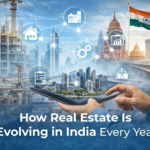


Real Estate Is Evolving in India Every Year
India’s real estate sector is undergoing a rapid and visible transformation year after year, driven by economic growth, technology adoption, policy reforms, and changing consumer preferences. What was once a largely unorganized and traditional industry is now becoming more transparent, customer-centric, and technology-driven.
One of the biggest changes in recent years is the impact of government initiatives. Policies like RERA (Real Estate Regulatory Authority) have brought accountability, transparency, and trust to the market. Buyers today are more confident, as project timelines, legal approvals, and financial disclosures are clearly regulated. Affordable housing schemes and infrastructure development—such as highways, metro rail projects, and smart cities—are also boosting demand across urban and semi-urban areas.
Technology is another major force reshaping real estate in India. Digital platforms, virtual site visits, online property listings, and data-driven decision-making have made buying, selling, and renting properties easier than ever. Builders are increasingly using advanced construction technologies, project management software, and automation to improve quality, reduce delays, and control costs.
Consumer preferences are also evolving. Modern buyers now prioritize sustainability, smart home features, better layouts, and community living. Demand for green buildings, energy-efficient designs, and well-planned residential townships is steadily increasing. At the same time, commercial real estate is adapting to flexible workspaces, co-working hubs, and mixed-use developments to meet new business needs.
Additionally, Tier-2 and Tier-3 cities are emerging as strong real estate markets due to improved connectivity, job opportunities, and lower property prices compared to metro cities. This shift is creating new growth opportunities for developers and investors alike.
Overall, India’s real estate sector is becoming more organized, innovative, and future-ready each year. With continuous infrastructure growth, digital transformation, and evolving lifestyles, the industry is set to play a key role in shaping the country’s economic and urban development.